A visit to the Microsoft Inclusive Tech Lab

This week I visited the Microsoft Campus in Redmond, Washington for MVP Summit. Most of what happens at Summit is under strict NDA, we meet product teams, hear about the roadmap, and give often-unvarnished feedback. But alongside those sessions, we got to explore the campus itself, which carries decades of tech history in its buildings and corridors. I visited the Microsoft Archives, which was fascinating, but the highlight was a tour of the Inclusive Tech Lab.
Meet Bryce
At the lab we met Bryce. He's a man with a mission, actually two missions. The first is to make technology more inclusive and accessible. The second is to make sure people know it exists.
Bryce is the co-creator of the Xbox Adaptive Controller. I'd spotted it earlier that day in the Microsoft Store on campus and couldn't quite work out what it was. The name actually tells you most of what you need to know. To the Xbox, it looks like any other controller. To the gamer, it's whatever you need it to be.
Rethinking the controller
The back of the controller has a row of 3.5mm ports. Connect switches to them and lay them out however you need. Bryce was clear on the terminology: these are switches, not buttons. Those switches come in all sizes, shapes, and activation forces. Some need only the lightest touch. Some are designed to be pressed with a foot, an elbow, or a chin.
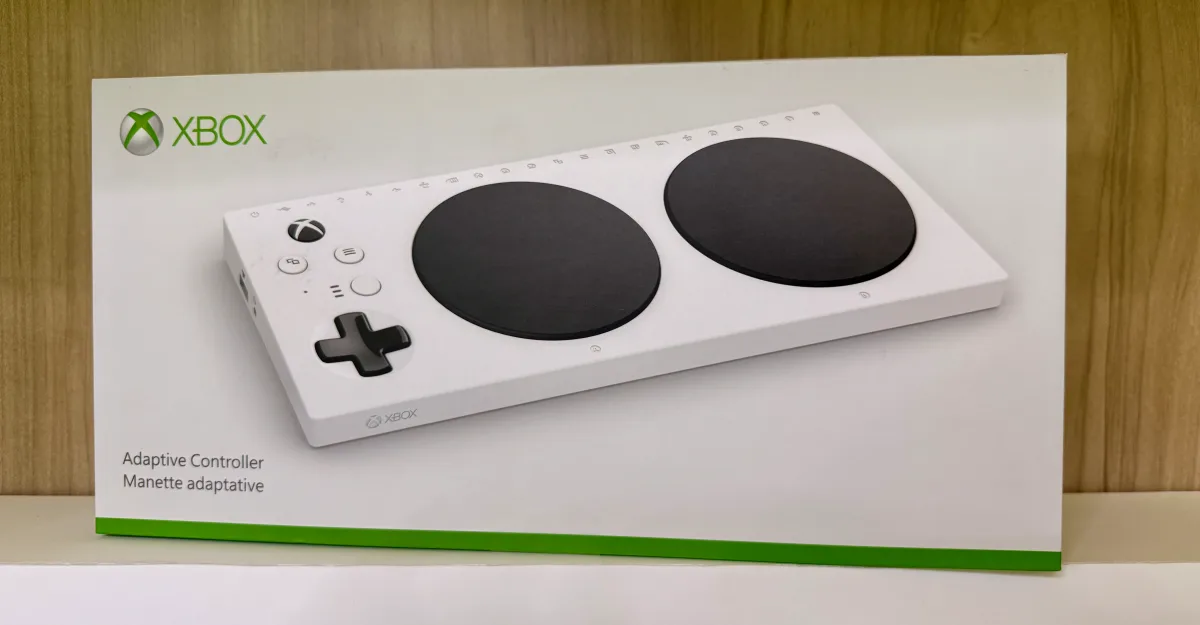
Bryce walked us through the assumptions baked into a standard controller: fine motor control in both hands, a certain grip strength, a specific range of motion in your fingers and wrists. Every one of those assumptions excludes someone. The adaptive controller doesn't try to fix the gamer, it fixes the controller.
Beyond the Xbox
The lab was born in 2017 inside the Xbox devices team, but it's grown well beyond games. The Microsoft Adaptive Hub brings the same philosophy to the PC, letting people connect whatever input devices work for them. It's the same idea: the computer shouldn't care how you talk to it.
What really impressed me was the open source angle. Microsoft publishes a range of STL files for free download, so anyone with a 3D printer can adapt the switches and adaptive mouse to their exact needs. That's not just accessibility, it's accessibility at the edge, tailored for one person, in their home, for their specific situation.
This is where the inclusive design philosophy gets interesting. It's not about building one product that works for everyone. It's about building a system flexible enough to work for anyone. The difference sounds subtle but it changes everything about how you approach the problem.
Reaching people
Solving the problem is only half the work. Bryce and the team have now done 25,000 tours of the lab, in person on the Redmond campus and virtually for anyone who can't make the trip. You can book a tour on their site, and I'd genuinely recommend it if you get the chance.
The Lab teams with occupational therapists, disability advocates, and gamers to understand the full range of needs before they build anything. That close relationship between the people who need the technology and the people building it is what makes the difference. It's not a design team imagining what might help, it's a collaboration with the people who live the problem every day.
Why this matters
Technology doesn't have an empathy setting. It does what it's designed to do, for the people it was designed for. Most of the time, that's a relatively narrow group: young, able-bodied, with standard motor control and two functioning hands. Everyone else makes do, finds workarounds, or simply can't participate.
The Inclusive Tech Lab is a reminder that this is a design choice, not an inevitability. Every assumption you build into a product is a door you close on someone. And with a bit of thought, and sometimes a 3D printer, you can open it back up.
Technology belongs to everyone. Not as charity, but as design.